
Free UK delivery on orders over £30 · Handmade in Hackney Wick · Book online

First-time clients

Your loc journey,explained.

New to locs, or new to us? Here’s what to expect, how to choose the right service and how to look after your locs at every stage. Much of it comes from Loc Life 101, our free magazine.

The Loc Life 101 magazine on a dark stone surface

Your first appointment

Five steps from booking to aftercare.

  1. 01Choose your appointment

    Already have locs? Book a retwist or interlocking. Starting out, or after instant locs, extensions, Microlocs, Sisterlocs or removal? Book a consultation and we’ll recommend a technique and confirm your price.

  2. 02Secure it with a deposit

    A £20 non-refundable deposit holds your slot and comes off your final balance. Appointments over £350 need a £150 deposit.

  3. 03Prepare your hair

    Come with clean, dry, detangled, product-free hair unless you’ve booked a wash. Tell us about any scalp or skin conditions; some services need a patch test 48 hours before.

  4. 04Talk it through in the chair

    We start by discussing your loc journey, your routine and the look you want to keep. Ask anything: there’s no technical vocabulary you need to know first.

  5. 05Leave with an aftercare plan

    Every appointment ends with guidance for your hair. You’ll know when to wash, how to moisturise and when to come back.

Ways to start locs

Six methods, one right for you.

Your texture, length and lifestyle decide the best start. We’ll recommend one at your consultation.

Two-strand twists

Hair is sectioned and two strands are twisted around each other from root to tip, firm but not tight at the root.

  • Best forMedium to thick textures with enough volume and curl to hold a twist.
  • UpsideBeginner-friendly and neat from day one.
  • Watch forCan take longer to lock fully, especially on finer textures.
Comb coils

A fine-tooth comb coils small sections of hair around itself from the root into uniform curls.

  • Best forShort to medium hair with tighter curl patterns (4A – 4C).
  • UpsideVery uniform, defined locs; tight textures lock quickly.
  • Watch forCan unravel with too much water or handling early on.

Palm rolling

Each section is rolled between the palms to encourage it to coil and smooth into a loc.

  • Best forCurly and kinky textures; also a maintenance technique.
  • UpsideSmooth, cylindrical locs and a tidy finish.
  • Watch forNeeds regular repeating while locs are young.

Interlocking

The end of each loc is pulled through its root with a tool to lock new growth in place.

  • Best forFiner or softer textures and active lifestyles.
  • UpsideSecure roots that hold up to washing and exercise.
  • Watch forDone too tightly or often, it can thin the root.

Freeforming

Hair is left to loc naturally with minimal manipulation.

  • Best forAnyone wanting an organic look with little upkeep.
  • UpsideLow maintenance and fully natural.
  • Watch forLess control over the size and shape of each loc.

Backcombing

Sections are teased toward the scalp with a fine comb to create knots that become locs.

  • Best forStraighter or looser textures.
  • UpsideCreates volume and locks hair that would not coil.
  • Watch forCan look fuzzy early on and needs care to keep neat.
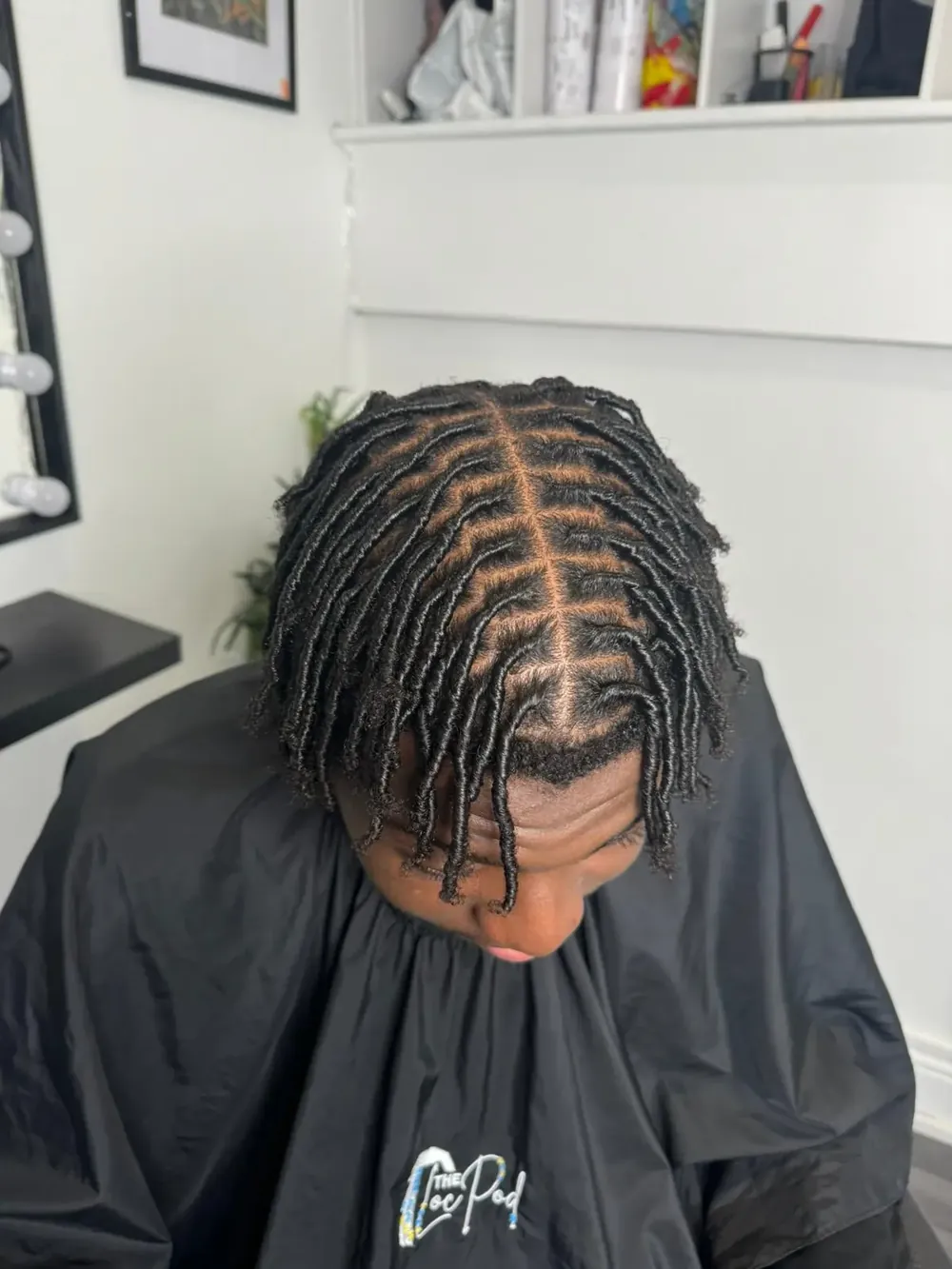
Two-strand starter twists with square partings

The stages of locs

Patience, then payoff.

Locs change a lot in the first year and a half. Knowing the stage you’re in tells you how gentle to be and how often to come in.

0 – 6 months

Starter

Freshly formed locs can look frizzy, uneven or fuzzy, and they are soft and delicate. Be gentle when washing, use a light holding product and retwist or palm roll every 4 – 6 weeks. Avoid over-styling.

6 – 12 months

Budding

Locs begin to swell and look fuller, with small knots (buds) forming inside as the hair tangles and intertwines. Keep up regular retwists and moisture; unravelling is less of a worry now.

12 – 18 months

Teen

Locs start to lengthen and settle into their shape, though some may still look unruly. Consistent maintenance keeps partings clean.

18 months +

Mature

Locs are dense, firmly locked and hang with weight. Maintenance becomes about root care, scalp health and keeping build-up away.

Everyday care

Maintenance for beginners.

Simple habits that keep locs healthy between appointments.

Shop loc care essentials

Use a residue-free shampoo and avoid over-washing. A stocking cap or mesh helps starter locs stay intact. Wait a week after any service.

Even locs need hydration. A light mist, or water with a few drops of oil, keeps them soft. Skip petroleum and heavy waxes.

Choose water-based, lightweight products. Heavy creams and gels leave residue that is hard to remove from inside a loc.

Wrap locs in a silk or satin scarf or bonnet, or sleep on a satin pillowcase, to reduce friction, lint and breakage.

When you book, tell us

  • How long you’ve had your locs, or that you’re starting out
  • Roughly how many locs you have, if you know
  • Your hair length: mini afro, neck, shoulder or below shoulder
  • Any scalp or skin conditions
  • The look you’d like, with a photo if you have one

Not sure which service you need?

Book a consultation or ask us first.

We assess your hair and goals, recommend a technique and confirm your price before anything is booked. Consultation fees come off your final total.

Ready when you are

Start or refresh your loc journey.

Book online in a few minutes. A £20 deposit secures your appointment and comes off your final balance.

Book appointment Prices
